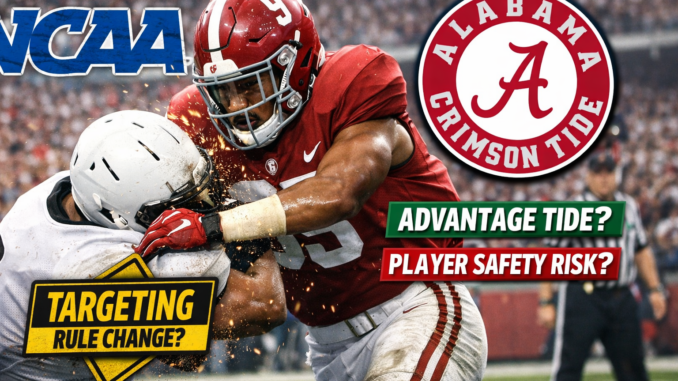
The NCAA has proposed a controversial change to the college football targeting rule — and it could have major implications for the Alabama Crimson Tide football.
Under the proposed 2026 rule adjustment, a player’s first targeting ejection of the season would no longer carry a suspension into the next game, regardless of when it occurs. The player would still be ejected from the current game — but no first-half suspension would follow.
For a program like Alabama, known for its physical defensive identity, this could be a game-changer.
Why This Matters for Alabama
Alabama has built its dynasty on dominant defensive play. From hard-hitting linebackers to aggressive secondary play, physicality is part of the Tide’s DNA. But targeting penalties have occasionally cost Alabama key players in crucial moments especially in rivalry matchups and postseason games.
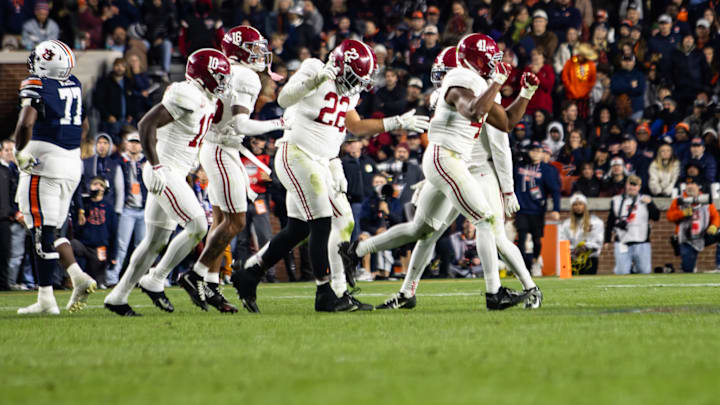
Under current rules, a second-half targeting call means missing the first half of the next game. That has impacted momentum and depth in high-stakes matchups across college football.
If the new proposal passes, that “carry-over” penalty disappears for a first offense.
Is This an Advantage for the Tide?
Supporters argue this restores fairness. One questionable call late in a game won’t affect the following week a major relief for programs competing for SEC and national titles.
Critics, however, say this sends the wrong message about player safety. The targeting rule was introduced to reduce head and neck injuries and promote safer tackling techniques. Removing next-game consequences may reduce deterrence especially for aggressive defensive schemes.
For Alabama fans, the debate is clear:
-
Does this protect players from inconsistent officiating?
-
Or does it weaken the integrity of player safety enforcement?
The Bigger Picture
The targeting rule has always been one of the most controversial aspects of modern college football. Now, with the NCAA proposing a softer first-offense penalty structure, the sport stands at a crossroads.
Programs like Alabama — built on toughness and discipline may benefit competitively. But the national conversation about safety and fairness isn’t going away.
Leave a Reply